If 2024 was the year of AI adoption, then artificial intelligence trends in 2025 show that this year will be all about AI transformation. AI is moving beyond automation to revolutionize entire industries and create new opportunities. It’s becoming an intelligent partner that analyzes vast data, makes complex decisions, and boosts human creativity.
From optimizing business operations to transforming healthcare with personalized care and faster diagnoses, AI’s role is expanding rapidly. In 2025, AI isn’t just improving efficiency—it’s unlocking innovations that will reshape how we live, work, and interact with technology. These artificial intelligence trends in 2025 highlight the incredible potential of AI as a true game-changer.
1. AI-Powered Automation Gets Smarter
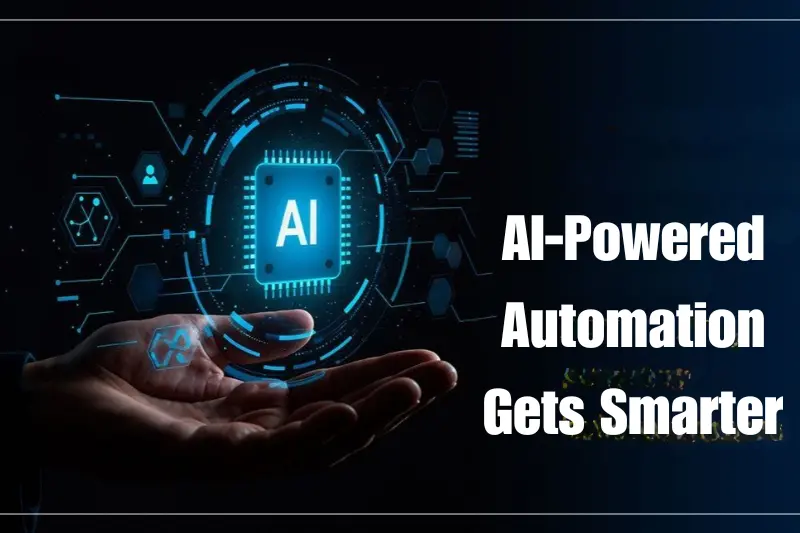
Automation has been a staple in industries for years, handling repetitive tasks like data entry or simple manufacturing processes. But in 2025, automation is leveling up — thanks to AI. Instead of just performing basic tasks, AI-driven automation is now capable of making complex decisions by analyzing vast amounts of data in real-time.
Imagine a business that no longer needs humans to sift through mountains of reports to find patterns or trends. AI can do this instantly, identifying opportunities or risks and suggesting strategic next steps. This allows employees to spend their time on higher-value work — like innovating new products, improving customer experience, or crafting business strategies.
Take customer service, for example. Chatbots are no longer just scripted robots answering basic questions. Modern AI-powered bots can understand customer emotions, respond with empathy, and manage complicated conversations. When an issue requires human attention, they know exactly when to escalate it — improving customer satisfaction and reducing wait times. This shift means businesses can deliver a more personalized, efficient, and human-like interaction at scale.
2. Healthcare Revolutionized by AI
Healthcare is one of the most exciting frontiers for AI in 2025. Medical professionals are using AI not just as a tool but as a partner in saving lives and improving treatment outcomes.
AI algorithms can now analyze medical images — like X-rays, MRIs, and CT scans — much faster and sometimes more accurately than humans. This capability helps doctors detect diseases at their earliest stages when treatment is most effective. For example, early signs of cancer, Alzheimer’s, or cardiovascular issues can be identified sooner, potentially saving countless lives.
But it doesn’t stop there. AI also enables personalized medicine. By analyzing a patient’s genetic information, lifestyle habits, and ongoing health data from wearable devices, AI helps doctors design treatment plans that are tailored specifically to the individual’s needs. This means treatments are more effective and side effects can be minimized.
Additionally, robotic surgeries guided by AI are becoming more common, allowing for precise and minimally invasive operations. These advancements translate into quicker recovery times and better patient outcomes.
3. Ethical AI and Responsible Use
With great power comes great responsibility. As AI systems become more integral to our lives, ethical concerns have taken center stage in 2025.
The focus now is on building AI that is transparent, fair, and accountable. This means companies and governments are working together to create clear rules and frameworks to ensure AI doesn’t infringe on privacy, discriminate against certain groups, or make biased decisions.
For example, many organizations are implementing “explainable AI” — systems that can clarify how they arrived at a decision. This helps build trust among users, especially in critical areas like hiring, lending, or law enforcement where AI decisions have a real impact on people’s lives.
Efforts are also underway to reduce bias by training AI on diverse, representative datasets and auditing AI models regularly. In short, the goal for 2025 is an AI that not only delivers innovation but also aligns with human values and respects ethical boundaries.
You may also like to read this:
Top Educational Technology Trends 2025 Shaping Learning
Future Of Education 2025: Hybrid, AI, And VR Innovations
8 Game-Changing Productivity Hacks For Entrepreneurs
10 Proven Investment Ideas For Entrepreneurs To Secure Funds
Smart Business Budgeting Tips For New Entrepreneurs
Complete Business Loans Guide For Easy Loan Approval
4. AI in Creative Fields
You might think AI is all about data and numbers, but in 2025, AI is shaking up the creative world too.
Artists, musicians, writers, and designers are increasingly partnering with AI tools to enhance their creativity. AI can generate ideas, suggest color palettes, compose music, or even draft written content — acting like a creative collaborator rather than a mere tool.
For example, musicians can use AI to experiment with new sounds or styles they wouldn’t have thought of alone. Writers can get AI-generated prompts or help polishing drafts. Visual artists use AI to create stunning digital artworks that blend human imagination with machine precision.
This collaboration between human creativity and AI accelerates the creative process and opens up new possibilities, making art and media more accessible and innovative than ever before.
5. Enhanced Natural Language Processing (NLP)
One of the most impressive artificial intelligence trends is the leap forward in natural language processing (NLP). In simple terms, NLP allows machines to understand, interpret, and respond to human language — the way we talk, write, and communicate.
Thanks to advances in 2025, AI can now grasp context, tone, and even subtle nuances in conversations. This means virtual assistants like Siri, Alexa, or Google Assistant are far more conversational and helpful. They don’t just respond to commands but understand questions in a more natural, human-like way.
For businesses, this means chatbots can provide better customer support by understanding the intent behind questions and responding appropriately. For users, this means smoother interactions with technology — whether you’re dictating a message, asking about the weather, or scheduling appointments, AI understands you better than ever.
6. AI and Sustainability
AI is not only transforming industries but also playing a critical role in tackling global challenges, especially environmental sustainability.
In 2025, AI technologies are being used to optimize energy consumption in buildings, factories, and cities — reducing waste and lowering carbon footprints. Smart grids powered by AI balance energy supply and demand more efficiently, integrating renewable sources like solar and wind power.
AI also improves waste management by identifying recyclable materials or optimizing collection routes for garbage trucks, reducing emissions and costs.
In environmental monitoring, AI models analyze satellite data and sensor inputs to predict weather patterns, detect forest fires early, and track climate changes more precisely. This helps governments and communities prepare for natural disasters, protect ecosystems, and make smarter decisions about conservation.
By combining technology and environmental science, AI is proving to be a powerful ally in creating a more sustainable future.
7. AI and Edge Computing: Smarter Devices, Faster Responses
In 2025, AI is no longer just something that runs far away in massive cloud data centers. Thanks to edge computing, AI is moving closer to where the action happens — right on the devices we use daily. This means smartphones, smart cameras, drones, and other connected gadgets can analyze and process data locally without having to send everything back to a distant server.
Why is this a game-changer? Because local processing means faster decisions and less dependence on internet connections. Imagine a smart security camera spotting suspicious movement and alerting you immediately, even if your Wi-Fi is down. Or think about drones that can navigate and respond instantly in complex environments without waiting for instructions from the cloud.
This trend also boosts privacy — since sensitive data stays on the device instead of traveling over networks — and helps devices work reliably in places where internet access is spotty or slow. Overall, edge computing brings AI power to your fingertips, making smart devices truly smart and responsive.
8. AI in Cybersecurity: Defending Against Smarter Threats
Cyber threats are evolving all the time, and in 2025, AI is playing a crucial role in defending against them. Modern hackers use sophisticated techniques that can easily slip past traditional security measures. AI-driven cybersecurity tools are becoming smarter and faster at spotting these threats before they cause damage.
How does this work? AI systems learn to recognize patterns of normal behavior within networks and devices. When something unusual happens—like a strange login, unexpected data transfers, or suspicious software activity—AI can flag it immediately. Some AI systems can even predict attacks by analyzing subtle signs humans might overlook, allowing organizations to stop breaches before they happen.
This means your personal data, business information, and even critical infrastructure like power grids or hospitals get stronger protection. AI-powered cybersecurity is becoming the digital guard that watches over us 24/7.
9. AI for Personalized Learning and Education
Education is undergoing a transformation thanks to AI’s ability to personalize learning experiences. Instead of a “one-size-fits-all” approach, AI platforms tailor lessons to fit each student’s unique needs, pace, and learning style.
For example, a student struggling with algebra might get extra practice and step-by-step explanations, while a gifted student could receive advanced problems that challenge and engage them. AI tutors can provide instant feedback and adapt in real time to keep students motivated and on track.
This personalized approach helps students learn more efficiently and enjoy the process. Plus, AI-powered education tools aren’t just for kids — they support adult learners, professionals upgrading their skills, and lifelong learners exploring new topics. In 2025, AI is making education more accessible, engaging, and effective for everyone.
10. AI-Driven Supply Chain Optimization
The pandemic highlighted how fragile and complex supply chains can be. In response, companies are turning to AI to make supply chains smarter, faster, and more resilient.
AI analyzes mountains of data—from supplier performance to weather forecasts and market demand—to predict potential disruptions and optimize logistics. For instance, if a supplier faces delays, AI can suggest alternative routes or suppliers instantly, minimizing downtime.
This means stores stay stocked with the products you want, deliveries happen on time, and companies reduce waste and costs. AI helps businesses anticipate problems before they happen and respond quickly, making supply chains more efficient and reliable.
11. AI and Human Augmentation: Enhancing Abilities
AI is helping humans push beyond natural limits through human augmentation — technologies that enhance physical and cognitive abilities.
In 2025, AI-powered devices like exoskeletons help people with mobility challenges walk or lift heavy objects more easily. Advanced prosthetics controlled by AI can mimic natural movements with impressive precision. Brain-computer interfaces are also making progress, allowing people to control devices or communicate using just their thoughts.
These technologies don’t just assist those with disabilities; they’re also being used to boost performance in workplaces or sports, improving strength, endurance, and focus. AI-human collaboration is becoming a powerful partnership that expands what humans can achieve.
12. AI in Finance: Smarter Investments and Risk Management
Finance has always been a fertile ground for AI innovation, and in 2025, AI continues to reshape the industry.
AI algorithms can sift through vast amounts of market data in seconds, spotting trends and risks that humans might miss. This helps investors make smarter decisions and seize opportunities quickly.
Banks are using AI to detect fraud by identifying suspicious transactions in real time, keeping your money safer. Credit scoring is also getting fairer and more accurate with AI analyzing more diverse data points.
Robo-advisors—AI-powered financial advisors—are becoming more popular too. They create personalized investment portfolios based on your goals and risk appetite, making investing accessible to people who might not have had the resources or knowledge before.
13. Multimodal AI: Understanding More Than One Sense
Humans communicate using many channels — words, images, sounds, gestures — and AI is catching up to this complexity through multimodal learning.
Multimodal AI systems can process and understand different types of inputs together. For example, an AI assistant can look at a photo you show it, listen to your voice command, and combine both to give you a more accurate and helpful response.
In 2025, this means AI will better understand the context and nuances of what you want, making interactions feel more natural and human-like. It’s a huge step forward in creating AI that truly understands you, not just your words.
Real-Life Examples of AI Transformations in 2025

AI in Finance: Smarter, Faster Decisions
Banks and financial institutions are leveraging AI to detect fraud in real time, manage risks, and offer personalized financial advice. For instance, AI algorithms can analyze spending patterns and alert you immediately if there’s suspicious activity on your account — saving time and money.
Moreover, robo-advisors powered by AI are helping everyday investors create smarter portfolios tailored to their financial goals and risk tolerance.
AI in Retail: Personalization at Its Best
Imagine walking into a store where the shelves automatically restock based on buying trends, or your online shopping experience becoming ultra-personalized with AI recommending exactly what you want before you even search for it.
Retailers are using AI to analyze customer behavior, optimize inventory, and create personalized marketing campaigns that feel less like ads and more like helpful suggestions. This not only improves customer satisfaction but also boosts sales.
AI in Transportation: Towards Autonomous Futures
Self-driving cars and drones are no longer sci-fi fantasies — they’re becoming a reality thanks to AI. In 2025, autonomous vehicles are making roads safer by reducing human error and optimizing traffic flow.
Logistics companies are also using AI-powered drones and robots to speed up deliveries and reduce costs, which means faster, more reliable shipping for consumers.
What This Means for You
You might wonder, “How will these AI trends impact my daily life?” The answer is — in more ways than you might expect. From getting smarter recommendations on your favorite apps to experiencing faster, more personalized healthcare and enjoying safer roads, AI is quietly reshaping your world.
If you work in any industry, understanding these artificial intelligence trends can help you prepare for the future — whether that means upskilling, adopting new technologies, or simply staying informed.
How to Stay Ahead with AI in 2025
- Learn Continuously: AI is evolving fast. Taking online courses or attending webinars can help you stay updated.
- Experiment with AI Tools: Try AI-powered apps or platforms that relate to your work or interests.
- Think Ethically: As AI grows, always consider the ethical implications of its use in your environment.
- Embrace Change: Businesses and individuals who adapt quickly will thrive in this AI-driven world.
Conclusion
Artificial intelligence trends in 2025 clearly demonstrate that AI is no longer just a supportive tool but a transformative force reshaping industries, enhancing human capabilities, and driving innovation at an unprecedented scale. From smarter automation and revolutionary healthcare advancements to ethical AI practices and personalized education, these trends highlight how deeply AI is integrated into our daily lives and business operations.
Staying informed and adaptable to these artificial intelligence trends will be crucial for individuals and organizations looking to thrive in this evolving landscape. As we move further into this transformative year, embracing AI responsibly and creatively will unlock new opportunities and redefine what’s possible for our future.